
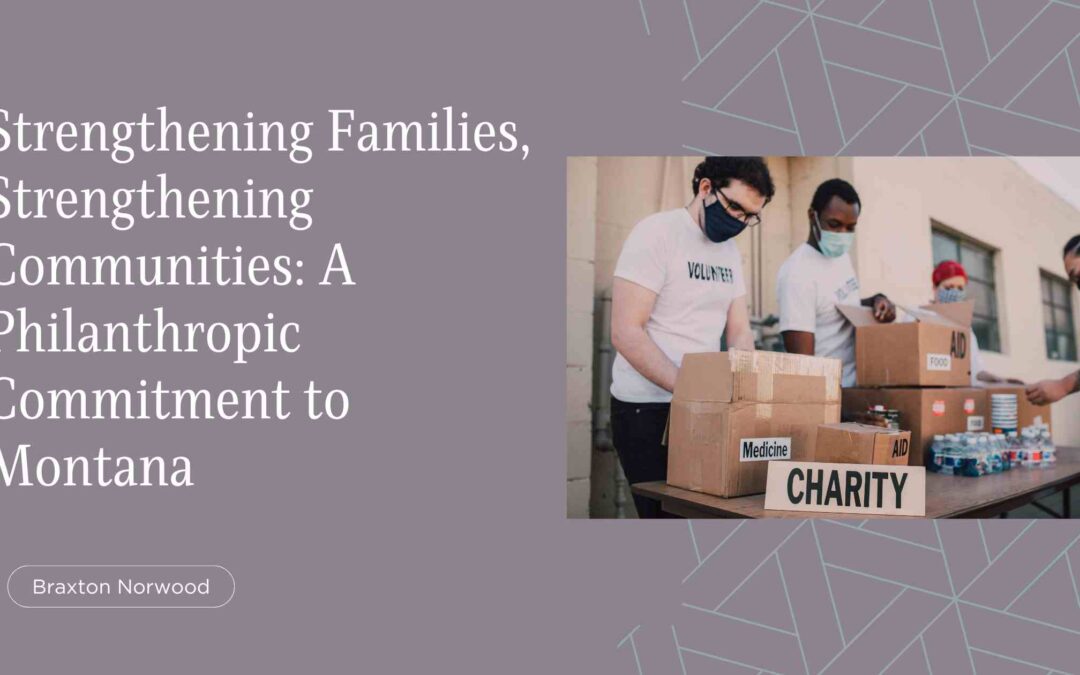
Philanthropy begins with a simple truth: strong communities are built on strong families. When families are supported, children thrive, neighborhoods stabilize, and hope becomes sustainable rather than temporary. In places like Montana—where communities are tight-knit but resources can be stretched—philanthropy and community involvement play a vital role in ensuring that no family is left behind.
Across rural towns, reservations, and growing cities, many families face challenges that are often unseen: financial instability, limited access to services, isolation, and generational hardship. Addressing these realities requires more than one-time assistance. It requires long-term commitment, local understanding, and a belief that dignity, stability, and opportunity should be available to every family.
Why Families Are the Foundation of Community Health
Families are the first support system most individuals experience. They shape emotional well-being, educational outcomes, and long-term health. When families are struggling, the effects ripple outward—impacting schools, workplaces, and entire communities.
Disadvantaged families often face overlapping challenges:
- Economic hardship and housing insecurity
- Limited access to healthcare and mental health support
- Educational gaps and reduced opportunities for children
- Social isolation, particularly in rural areas
Philanthropy that focuses on families does more than address immediate needs; it strengthens the very fabric of a community.
Understanding the Montana Context
Montana’s geography and culture present both strengths and challenges. The state is defined by resilience, independence, and strong community identity. At the same time, its vast distances, rural populations, and limited infrastructure can make access to resources difficult—especially for families in need.
In many Montana communities:
- Services may be spread across long distances
- Families may hesitate to ask for help due to pride or stigma
- Economic shocks can have outsized effects
- Support systems rely heavily on local organizations and volunteers
This makes localized, community-driven philanthropy especially important. Solutions that work in large urban centers often need adaptation to be effective in Montana.
A Philosophy of Empowerment, Not Dependency
Effective philanthropy does not seek to “fix” families—it seeks to empower them. The most impactful community involvement respects the strengths families already possess and provides support that restores stability and confidence.
This approach emphasizes:
- Meeting immediate needs while supporting long-term growth
- Partnering with local organizations that understand community dynamics
- Offering resources without judgment or bureaucracy
- Focusing on resilience rather than rescue
When families are treated with respect and trust, philanthropy becomes a partnership rather than a transaction.
Supporting Disadvantaged Families with Dignity
Disadvantaged families are not defined by a lack of effort or care. Often, they are navigating circumstances beyond their control—job loss, illness, unexpected expenses, or systemic barriers.
Philanthropic efforts aimed at these families can include:
- Emergency support during times of crisis
- Access to education, childcare, and skill development
- Mental health and wellness resources
- Programs that support parents as caregivers and leaders
The goal is not just to help families survive difficult moments, but to help them regain footing and plan for the future.
Community Involvement as a Shared Responsibility
Philanthropy is strongest when it extends beyond financial giving. Community involvement—time, presence, listening, and advocacy—creates trust and ensures that support aligns with real needs.
In Montana, community involvement often looks like:
- Collaborating with local nonprofits and schools
- Supporting grassroots initiatives led by community members
- Volunteering and building long-term relationships
- Investing in programs that reflect local values
This kind of involvement recognizes that meaningful change is rarely imposed from the outside; it grows from within.
The Role of Foundations in Local Impact
Foundations dedicated to family and community well-being play a unique role. They can provide stability, continuity, and strategic support that smaller organizations may lack. By focusing on families and disadvantaged communities, foundations help ensure that resources reach those who need them most.
Effective foundations prioritize:
- Transparency and accountability
- Listening to community voices
- Long-term impact over short-term visibility
- Collaboration rather than competition
In Montana, where relationships matter deeply, this approach builds credibility and lasting trust.
Measuring Impact Beyond Numbers
While metrics are important, the true impact of philanthropy is often measured in quieter ways:
- A family that stays housed during a difficult year
- A child who remains engaged in school
- A parent who regains confidence and stability
- A community that feels supported rather than overlooked
These outcomes may not always make headlines, but they shape lives in profound ways.
Looking Toward the Future
The future of philanthropy in Montana depends on sustained commitment to families and communities. As economic pressures, social changes, and environmental challenges evolve, the need for compassionate, locally grounded support will only grow.
By investing in families—especially those facing disadvantage—philanthropy helps create communities that are not only resilient, but hopeful.
Conclusion
Philanthropy is not about charity alone; it is about responsibility, connection, and belief in human potential. When families are supported with dignity and care, entire communities benefit.
In Montana, where community ties run deep and challenges are often faced quietly, philanthropy and community involvement offer a powerful way to ensure that strength is matched with support. By standing alongside families—especially those most in need—we help build a future where every community has the opportunity to thrive.